
The Streak That Broke You
You downloaded a habit tracker. You were consistent for 11 days. Then one evening — travel, exhaustion, a bad day — the streak snapped.
And somehow, after that, the app felt broken. Not the streak. You.
That quiet shame is something millions of people experience, and almost none of them talk about it. You didn’t fail a habit. A badly designed system failed you.
Here’s what the research — and a bit of honest psychology — actually says about why habit trackers so often make things worse before they make them better.

Why Streaks Are Psychologically Risky
Streak mechanics feel motivating at first. They leverage loss aversion — you don’t want to break a 20-day run. That’s real, measurable pressure.
But loss aversion has a dark twin: all-or-nothing thinking.
Once a streak breaks, the mental narrative flips hard. “I already failed today” becomes the justification for skipping tomorrow, and the day after. Psychologists call this the what-the-hell effect — and habit apps that worship streaks bake it directly into their design.
- Missed one day? App shows red. Brain says: I’m bad at this.
- Miss two days? The app feels like evidence of your failure — not a tool for your growth.
- By day three, the app is deleted.
This isn’t a willpower problem. It’s a design problem.
“Motivation is what gets you started. Habit is what keeps you going — but only if the system forgives human imperfection.”
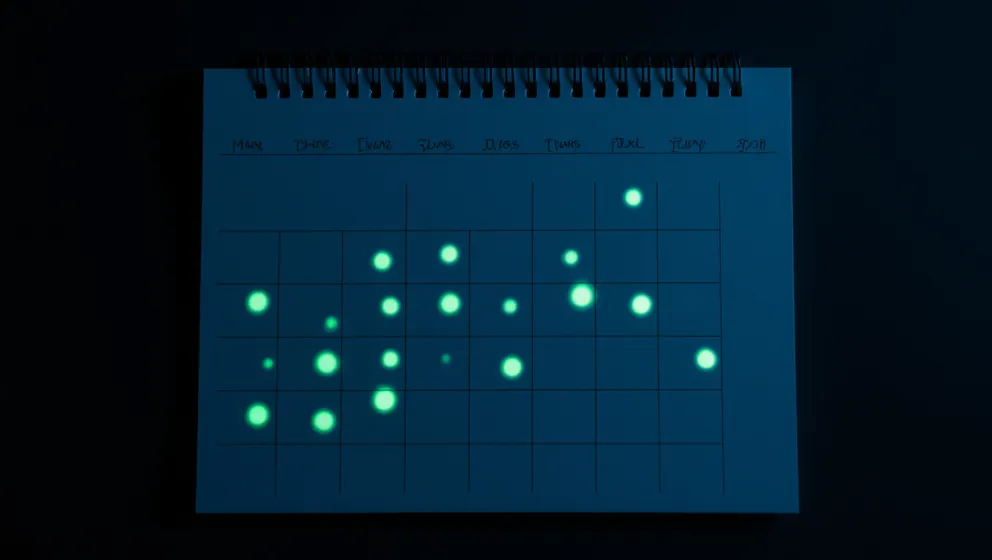
The Attendance Mental Model (And Why It Works Better)
There’s a different way to think about tracking — one that’s been used in schools and workplaces for decades, not because it’s glamorous, but because it actually reflects how consistency works in the real world.
Think about school attendance. You didn’t need a perfect record to pass. You needed enough presence over time. 85% attendance is success. 100% is a bonus, not a baseline.
When you reframe habit tracking as attendance rather than streaks, three things shift:
- Missed days don’t reset your progress. They’re just absences in a larger record. One bad day is 1 out of 30, not the end of everything.
- Patterns become visible. Maybe you consistently skip Tuesdays — not because you’re lazy, but because Tuesday is chaos. That’s useful information you can act on.
- Consistency over time is rewarded, not punished. A month of 22/30 days is a success, not a failure with 8 missed days.
What Habit Science Actually Says
The modern understanding of habit formation — drawn from researchers like Phillippa Lally at UCL and the work of James Clear — points to a few non-negotiable truths:
| Myth | Reality |
|---|---|
| You need 21 days to form a habit | Average is 66 days, ranging from 18 to 254 |
| Missing a day breaks the habit | Occasional misses have no significant effect on long-term outcomes |
| Motivation drives habits | Environment design and cues matter far more than motivation |
| Complex tracking = better results | Simpler systems with lower friction are more consistently used |
The friction point matters more than most people realise. The harder an app is to open and log, the less likely you are to use it when it matters most — on the hard days.
How to Actually Build Habits That Stick in 2026
Here’s a framework that holds up, built from behaviour science and real-world pattern:
1. Start Stupidly Small
BJ Fogg’s Tiny Habits research shows that the starting size of a habit predicts long-term adherence better than motivation level. Want to read more? Start with one page. Not a chapter. One page.
2. Track Attendance, Not Perfection
Record whether you showed up — even for 2 minutes. An app that logs “yes / no” per day and then shows your monthly attendance percentage gives you honest, non-punishing data. Apps designed around attendance and habit tracking tend to show this pattern view clearly, which is far more useful than a broken streak counter.
3. Audit Your Environment
If you skip the gym every Monday, it might be because Monday evenings are when you decompress with your partner. That’s not failure — that’s a scheduling mismatch. Your tracking data should reveal this, not shame you for it.
4. Give Yourself a “Never Miss Twice” Rule
This comes from James Clear: missing once is an accident. Missing twice is the start of a new habit — the habit of not doing the thing. The rule isn’t about perfection. It’s about recovery speed.
5. Celebrate Showing Up, Not Just Output
The identity shift matters. “I’m someone who exercises” is a more durable foundation than “I’m someone trying to lose weight.” Every time you log attendance — even on a short day — you’re reinforcing who you are, not just what you did.

Choosing the Right Habit Tracker for Android
Most habit trackers on Android in 2026 fall into two categories:
- Gamified apps that use streaks, coins, and XP. Fun at first, psychologically risky for actual habit formation.
- Attendance-style trackers that log presence and show patterns without punishing you for missing days.
If you’re serious about building something that lasts, the second category is more aligned with how your brain actually builds behaviour. Simple logging, pattern visibility, and data you can actually act on.
The Attendance Tracker & Register app for Android takes this approach — it’s built around the idea that showing up consistently over time matters more than a perfect run. You see your monthly attendance, not a shame counter.
A simpler way to track your habits
If you’ve been burned by streak-based apps before, something built around attendance and consistency tracking might feel like a breath of fresh air. No shame mechanics. Just honest data about where you actually are.
Frequently Asked Questions
How long does it really take to build a habit?
Research from University College London suggests the average is 66 days, but the range is wide — anywhere from 18 to 254 days depending on the person and the habit. The 21-day rule is a myth popularised by a misread of older self-help literature.
Does missing a day ruin a habit?
No — this is one of the most damaging myths in the habit space. Lally’s research found that occasional missed days had no significant effect on long-term habit formation. The danger is missing multiple days in a row, not the single miss itself.
Are streak-based habit apps bad?
Not inherently — but they carry psychological risk. Streaks leverage loss aversion, which is powerful but brittle. When the streak breaks, the app becomes a record of failure rather than a tool for growth. Attendance-based tracking is often more forgiving and more honest.
What’s the best habit tracker for Android?
The best habit tracker is the one you actually use consistently. Look for low friction (quick to open and log), honest pattern display (not just streaks), and data that helps you understand your behaviour rather than shame you for imperfection.
How many habits should I track at once?
Most behaviour researchers recommend starting with one to three habits maximum. Tracking too many creates cognitive load and makes the daily logging feel like a chore — which ironically causes people to stop tracking entirely.