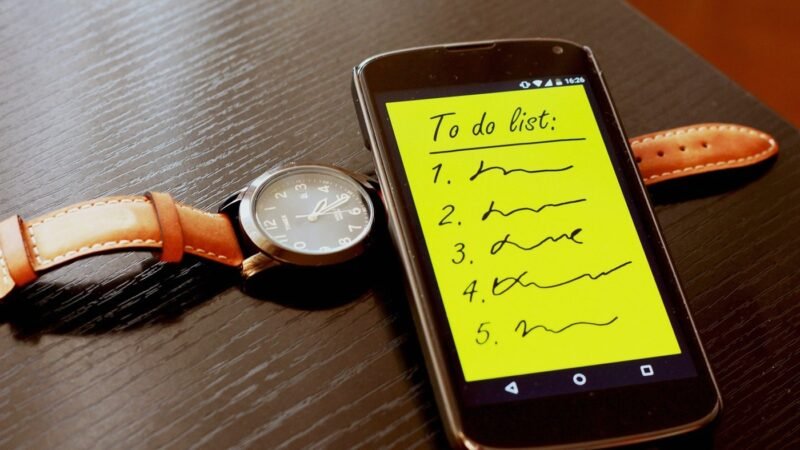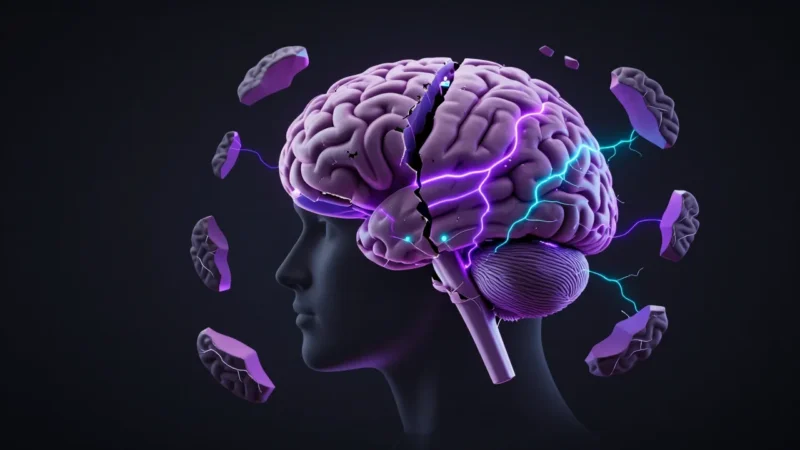
You open your task app. You stare at 47 items. You close the app. You open Instagram.
Sound familiar? You’re not lazy. You’re not broken. Your system is broken — and the science explains exactly why.
Most productivity advice focuses on adding more structure to your task list: color codes, priority flags, due dates, sub-tasks, time blocks. But for millions of people, all that structure does the opposite of what it promises. Instead of clarity, it creates paralysis. Instead of momentum, it creates dread.
Here’s why your to-do list might be working against your brain — and what actually helps.

The Zeigarnik Effect: Why Undone Tasks Haunt You
In the 1920s, Soviet psychologist Bluma Zeigarnik noticed something odd: waiters could recall every detail of an unpaid order, but forgot it completely the moment the bill was settled. This became known as the Zeigarnik Effect — the mind holds unfinished tasks in active memory, constantly pinging you about them.
Your to-do list is essentially a collection of open loops. Every unchecked item is a background process running in your brain, consuming mental bandwidth whether you’re looking at the list or not.
This is the first crack in most task systems: they accumulate items without giving the brain any signal that those items are under control. More tasks, more anxiety — not more productivity.
Decision Fatigue Is Killing Your Focus
Every item on your to-do list is a micro-decision: Do I do this now? Later? Is it urgent? Important? Should I split it into subtasks?
Research on decision fatigue shows that mental energy for decision-making is finite. The more choices you make — even tiny ones — the worse your subsequent decisions become. Judges give harsher sentences before lunch. Shoppers make impulsive purchases near checkout. And you scroll your phone instead of tackling the task you opened the app for.
“A complex task system doesn’t just track your work. It makes you work just to manage the tracking.”
A to-do list with 47 items and five priority levels forces you to make a new decision every time you look at it. That cognitive tax accumulates silently — and it’s often why the hardest part of any task is simply starting.
The “More Features” Trap
The productivity app industry has a perverse incentive: to keep users engaged, they add features. Tags. Recurring tasks. Kanban boards. Widgets. Integrations. Collaboration tools.
For a small number of power users, this is genuinely useful. But for most people, each new feature is another surface where anxiety can live.
| Complex Task App | Simple Task App |
|---|---|
| Requires setup and maintenance | Open and go |
| Multiple priority systems to decide between | One list, one focus |
| Feels productive to organize tasks | Feels productive to complete tasks |
| Easy to confuse busyness with progress | Progress is obvious and visible |
| High cognitive overhead | Low cognitive overhead |
There’s a name for the phenomenon of feeling productive while organizing your tasks instead of doing them: pseudo-work. It gives you the dopamine hit of activity without actual output.

What Your Brain Actually Needs From a Task System
Decades of research on cognitive load theory (developed by educational psychologist John Sweller) gives us a clear picture of what the brain needs to perform well:
- Reduced extraneous load — less mental effort spent on managing the system itself
- Clear working memory — fewer competing “open loops” in active thought
- Visible progress — a sense that things are moving forward
- Low decision overhead — fewer micro-choices before getting to the actual work
A great task system isn’t the one with the most features. It’s the one that disappears into the background, lets you capture what needs doing, and gets out of your way.
The Anti-Procrastination Design Philosophy
There’s a growing movement in productivity app design that takes cognitive science seriously. Instead of adding layers, it strips them away. The core insight: most procrastination isn’t laziness — it’s the brain’s response to ambiguity, overwhelm, and invisible friction.
Apps built around this philosophy tend to share a few traits:
- Minimal interface — nothing to “manage” before you can start
- No performance anxiety built into the UI (no streaks to break, no complexity to maintain)
- Frictionless capture — adding a task takes one gesture
- A sense of momentum — completing things feels clean and final
A simpler way to manage your tasks
If the standard to-do app approach is making you more anxious rather than less, anti-procrastination task managers like Task Bucket are designed around exactly this problem — getting things done without the overhead of managing the system itself.
How to Actually Fix an Overwhelming Task List
You don’t need a new app, a new system, or a productivity course. You need to apply a few evidence-backed principles to whatever system you use.
1. The 3-Task Rule
At the start of each day, identify exactly three tasks that, if completed, would make the day a success. Not the most urgent. Not the most impressive. The three that actually matter. Everything else is optional that day.
2. Close the Loops
For items that can’t be done today, write a specific next action beside them — “Email Dr. Sharma about report” rather than “Deal with report.” Specificity is what tells the Zeigarnik Effect to stand down.
3. Capture First, Organize Never
The urge to organize your task list before working on it is a procrastination trap. Capture everything, then work. Organize rarely — only when the system genuinely isn’t working.
4. Delete Ruthlessly
Go through your task list right now. For every item older than two weeks that you haven’t touched: delete it. If it was truly important, it will resurface. Most of those items are ambient guilt masquerading as tasks.
The Surprising Power of “Done”
There’s real neurological pleasure in completion. When you finish a task, your brain releases a small dose of dopamine — the same reward signal that drives motivation. Complex task systems often undermine this by fragmenting work into so many sub-tasks and dependencies that nothing ever feels truly “done.”
Simple systems win here. A short, honest list of tasks you can actually complete today is neurologically more powerful than a sophisticated system that tracks everything but never feels finished.
“Momentum is the real productivity system. Everything else is infrastructure.”
If you catch yourself spending more time managing your tasks than doing them, that’s not a discipline problem. It’s a signal that your system needs simplifying. The best productivity tool is the one that makes you feel capable, not the one that makes you feel organized. Those are different things — and confusing them is one of the most common traps in modern productivity culture.
Frequently Asked Questions
Why does my to-do list make me anxious instead of organized?
It’s likely the Zeigarnik Effect — your brain treats every unchecked task as an open loop that demands mental attention. Too many open loops create background cognitive noise that feels like anxiety. A shorter, more focused list with clear next actions is more effective than a comprehensive one.
What’s the best number of tasks to have on a daily to-do list?
Research on working memory and decision fatigue suggests 3–5 meaningful tasks per day is the sweet spot for most people. Beyond that, cognitive load increases without proportional productivity gains. The goal is completion, not comprehensiveness.
Is procrastination caused by laziness or something else?
Mostly something else. A large body of research links procrastination to emotional avoidance — specifically the avoidance of the negative feelings associated with a task (anxiety, boredom, self-doubt) rather than a lack of motivation or willpower. Reducing task ambiguity and system friction is often more effective than “trying harder.”
How do I stop feeling overwhelmed by everything I need to do?
Start with a brain dump — write everything down in one place without organizing it. Then pick your top 3 items for today and close the rest. You’re not ignoring the other tasks; you’re telling your brain they’re handled. That’s often enough to break the paralysis.
Should I use a simple or complex task management app?
It depends on your use case. For personal daily task management, simpler is almost always better — fewer features means fewer decisions, less maintenance, and more actual output. Complex tools like project management software are appropriate for teams coordinating work across multiple people, not for an individual’s daily task list.