Most people do not quit home workouts in a dramatic way.
They do not throw away the yoga mat, delete every fitness app, or decide they no longer care about feeling stronger. It is quieter than that. One evening gets busy. The next morning feels too rushed. A set of pushups becomes “later.” Later becomes tomorrow. Tomorrow becomes the weird guilt of restarting from zero.
The workout itself may only take ten minutes. The real resistance is everything around it: choosing what to do, counting reps while tired, and keeping track without turning exercise into admin work.
That is where an AI rep counter can be genuinely useful. Not because technology magically creates discipline, but because it removes a few small decisions at the exact moment your habit is most fragile.
Why home workouts are harder to repeat than they look
On paper, home workouts should be the easiest fitness habit in the world. No commute. No gym bag. No waiting for equipment. No monthly membership guilt.
But convenience has a strange weakness: when something can happen anytime, it often happens at no specific time.
A gym class has a start time. A trainer has social pressure. A sport has teammates. A home workout has you, your floor, and the extremely persuasive voice that says, “Just do it after this one thing.”

Research on exercise habits points to the importance of the instigation habit: the automatic pattern that gets you started. One study found that beginning exercise predicted future frequency more strongly than the movement sequence itself.
That sounds obvious until you look at your own routine. Most missed workouts are not missed at rep 17. They are missed before the first rep happens.
“The hardest rep is usually the one before the workout starts.”
The hidden friction of counting your own reps
Counting sounds simple until your breathing changes.
During pushups, squats, or jumping jacks, your attention is split between movement, form, fatigue, and the number in your head. Miss one count and the session becomes fuzzy. Did you do 18 or 20? Should you write it down now or later?
None of these questions is huge. That is exactly why they are dangerous. Tiny frictions rarely feel important enough to solve, but they quietly make the habit feel heavier.
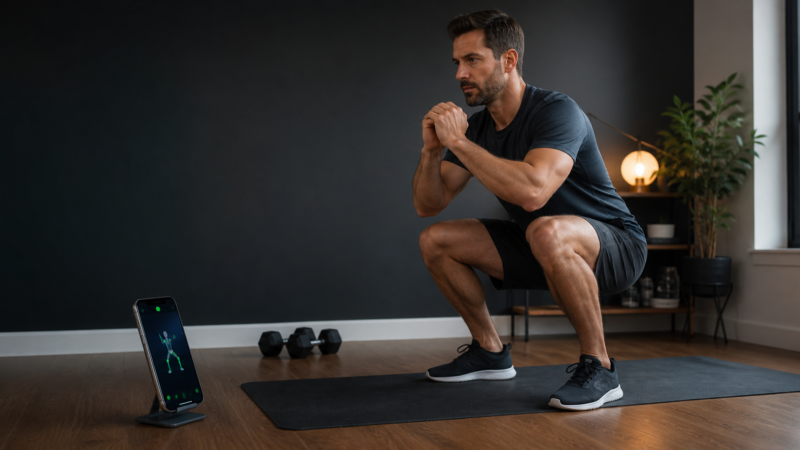
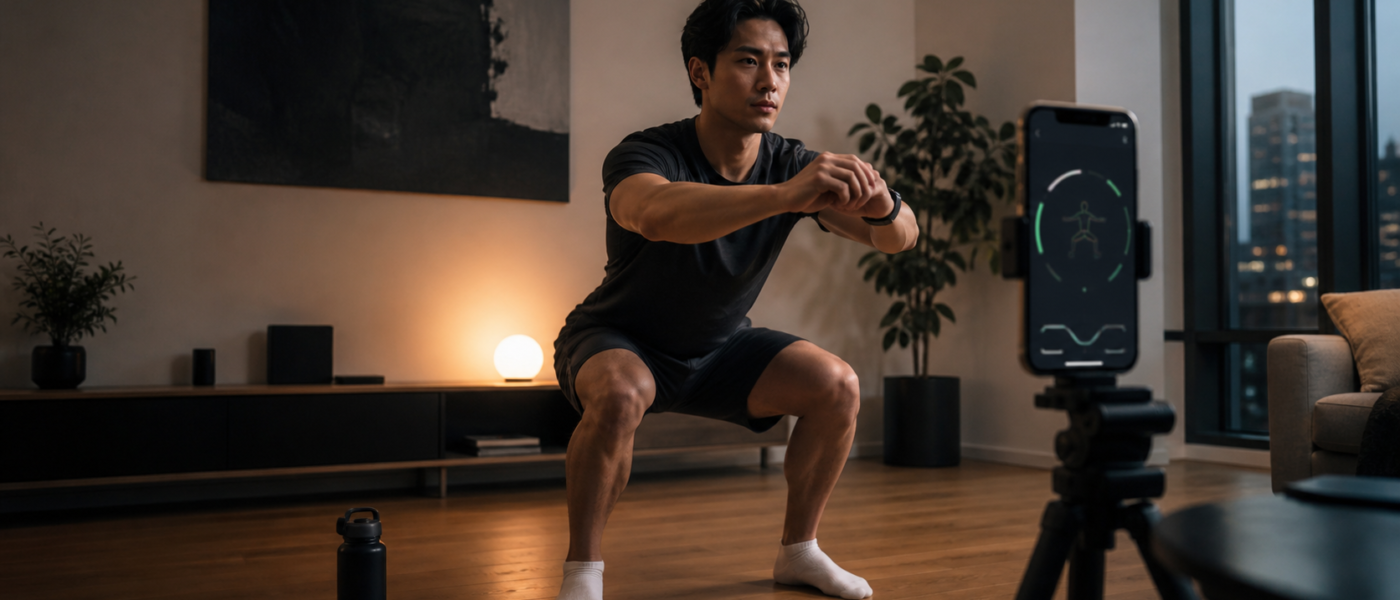
An AI rep counter on iPhone changes the experience by making the phone act like a quiet observer. You set it up, start the movement, and let the camera-based tracking handle the counting for exercises like pushups, jumping jacks, and squats.
The benefit is not just accuracy. It is attention. When you stop spending working memory on numbers, you can spend more of it on movement quality.
A better mental model: make workouts visible
People often think motivation comes before evidence. “Once I feel motivated, I will work out consistently.”
In practice, evidence often comes first.
You do a small session. You see it counted. You repeat it. You notice improvement. Your brain starts believing, “I am the kind of person who does this.” The identity follows the proof.
The Centers for Disease Control and Prevention recommends that adults include muscle-strengthening activity at least two days per week, alongside aerobic activity. That does not mean every session must be intense or complicated. For many people, the better starting point is simply making strength work visible enough to repeat.
The Cue, Start, Count, Repeat framework
If you want a home workout habit that survives normal life, keep the system small enough to remember when you are tired.

1. Cue
Attach the workout to something that already happens. Morning coffee. Closing your laptop. Getting home. Finishing a shower. The more stable the cue, the less negotiation you need.
2. Start
Make the first action almost too easy. Put the phone on the tripod. Open the workout tracker. Stand on the mat. The goal is not to feel heroic. The goal is to cross the starting line.
3. Count
Let the system record the obvious part. Apps like RepCounta AI are useful here because bodyweight sessions often depend on simple, repeatable movements. If your phone can count reps while you move, the session feels less like bookkeeping.
4. Repeat
Repeat the same small loop before expanding it. Consistency is not built by constantly redesigning the plan. It is built by making the same action feel familiar.
| Old approach | More repeatable approach |
|---|---|
| Plan a full workout every time | Use one default session you can start fast |
| Rely on motivation | Attach exercise to a stable daily cue |
| Count reps in your head | Use a rep counter so attention stays on form |
| Restart from guilt | Resume from visible proof |
Why AI tracking works best when it feels boring
The best fitness technology disappears into the routine.
For home exercise, that means a few practical things:
- The setup should take seconds, not ten minutes.
- The feedback should be clear, not overwhelming.
- The tool should support the movement you already intend to do.
- The data should help you repeat the habit, not turn fitness into another dashboard to maintain.
This is where AI becomes useful: a small layer that handles dull parts like counting, motion detection, and visible completion.
A simpler way to track bodyweight sessions
If your workout is mostly pushups, squats, or jumping jacks, RepCounta AI for iPhone fits the kind of routine where you want less setup and more visible follow-through.
Privacy matters when your camera is involved
Fitness tracking with a camera feels personal because it is personal: your body, your room, your effort, your habits.
On-device AI is important here. Apple’s own privacy materials describe on-device processing as a way machine learning can improve experiences while keeping more personal information on the device. For camera-based fitness, that expectation feels especially relevant: people should not have to trade comfort for convenience.
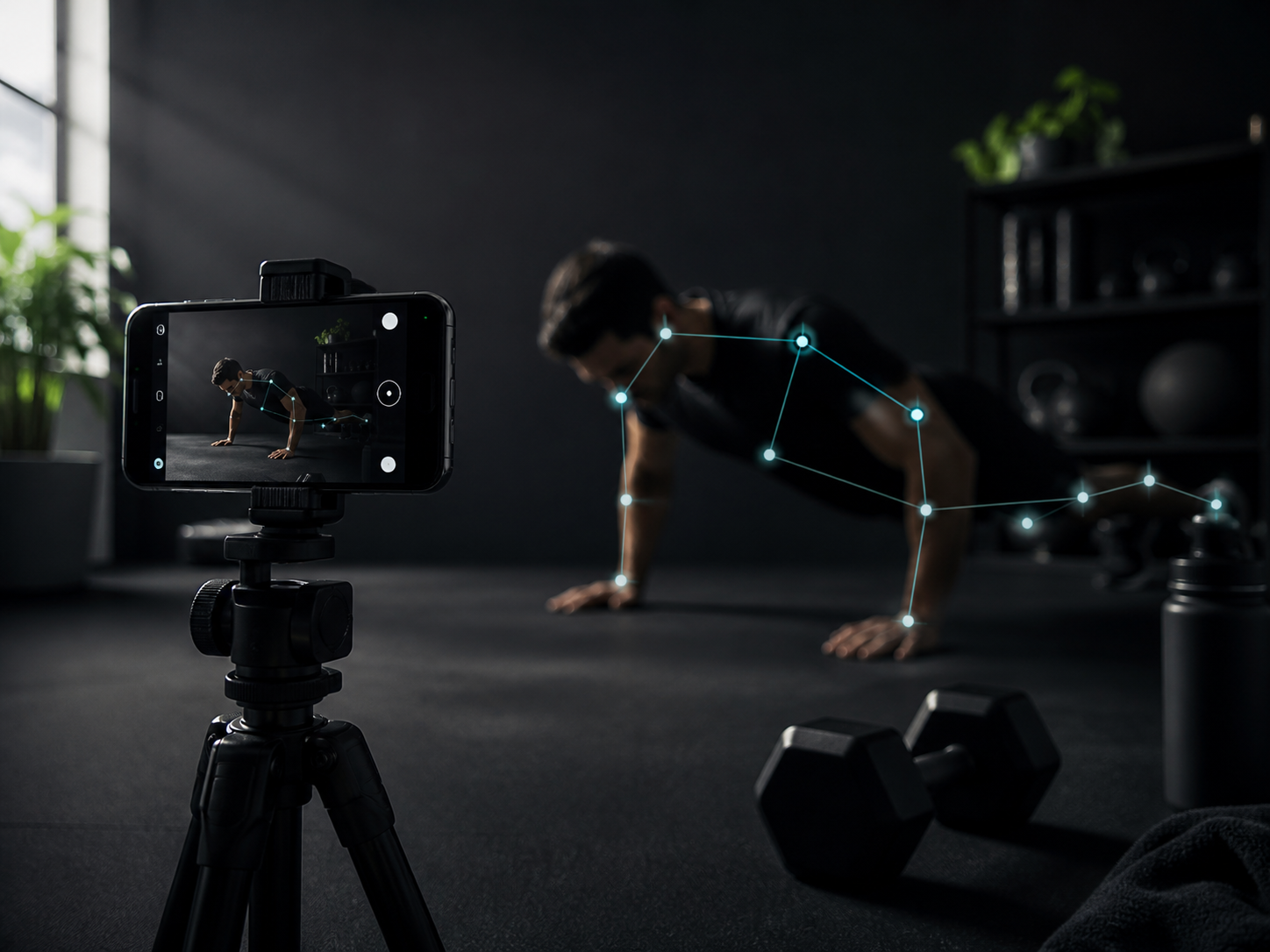
Even if you are not deeply technical, the principle is easy to understand: a workout tool should ask for only what it needs, explain its role clearly, and avoid making a private routine feel exposed.
How to start without overbuilding the habit
The common mistake is turning a fresh burst of motivation into a giant system. New schedule, new exercises, new diet, new tracking spreadsheet, new sleep routine, new identity by Monday.
That usually feels amazing for two days. Then life pushes back.
Try this instead:
- Pick one exercise: pushups, squats, or jumping jacks.
- Pick one cue that already happens daily.
- Set a minimum session so small you can do it on a bad day.
- Use a tracker only to reduce friction, not to judge yourself.
- Increase reps only after the loop feels automatic.
The emotional shift is subtle but powerful. You stop asking, “Can I become a disciplined person?” and start asking, “Can I make this one action easy enough to repeat?”
Mini conclusion: consistency is a design problem
If you keep failing home workouts, it may not mean you are lazy. It may mean your system expects too much from motivation and too little from design.
Make the start obvious. Make the workout short enough to repeat. Make progress visible. Let technology handle the counting if that helps you stay present.
The goal is not to build the most impressive workout plan. The goal is to create a routine that your future tired self can still begin.
FAQ
Can an AI rep counter improve workout consistency?
It can help by reducing friction. When counting and tracking happen automatically, it becomes easier to start, finish, and repeat simple bodyweight workouts.
What exercises work well with an AI rep counter?
Clear, repeatable bodyweight movements usually work best. RepCounta AI focuses on exercises such as pushups, jumping jacks, and squats.
Is a short home workout enough to build a habit?
Yes, especially at the beginning. Short sessions lower resistance and help build the automatic start pattern that makes longer-term consistency more realistic.
Do I need a gym to build strength consistently?
No. A gym can help, but bodyweight exercises at home can support strength-building when they are repeated consistently and progressed gradually.