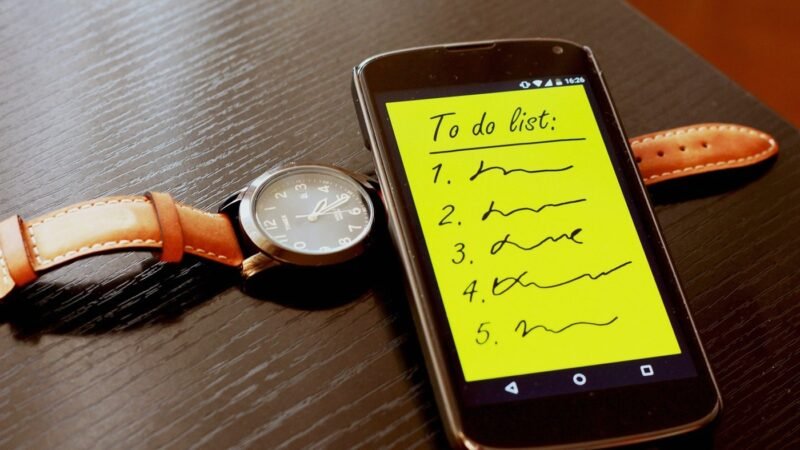
You open your phone to reply to a message. While you’re there, you check your emails. That reminds you of a task you were supposed to do. You start it — then a notification pulls you somewhere else entirely. Twenty minutes later, you look up and wonder: what was I even doing?
This isn’t distraction. This is task switching — and it’s one of the most quietly destructive things happening to modern productivity.
The frustrating part? Most people don’t realise it’s happening. They just feel a vague sense of mental fatigue, scattered thinking, and the nagging feeling that they worked all day but got nothing done.
Here’s what’s actually going on inside your brain — and what you can do about it.

What Task Switching Actually Is
Task switching — also called context switching — is what happens when your brain shifts attention from one task to another. It sounds straightforward. In practice, it’s anything but.
Neuroscientists at MIT and the American Psychological Association have studied this for decades. Their consistent finding: the human brain is not built for parallel processing in the way most people assume. When you switch tasks, your brain doesn’t cleanly close one thing and open another. It carries residual activation from the previous task into the next one — a phenomenon called attention residue.
This was first described by researcher Sophie Leroy in a 2009 study: even after you’ve physically moved on to a new task, part of your brain is still processing the old one. The result is reduced cognitive capacity on the new task — sometimes for 20 minutes or more after a single switch.
The Real Toll: Why You Feel Exhausted After a “Productive” Day
There’s a reason you can spend eight hours working and still feel like you accomplished nothing. Task switching is metabolically expensive. Your prefrontal cortex — the part responsible for decision-making, focus, and planning — has to burn through mental energy every time it reorients to a new context.
This creates what researchers call decision fatigue and ego depletion: the more micro-decisions and switches your brain makes, the harder it becomes to make quality decisions later. The tank is running low by 3pm — not because you worked hard, but because you switched constantly.
A landmark APA study on multitasking found that people who switch tasks frequently lose up to 40% of productive time compared to single-taskers. Not because they’re lazy. Because of the invisible switching cost baked into every transition.
“The mind is not designed to do two things at once. What looks like multitasking is really just rapid, inefficient switching — and your brain is paying a price with every jump.”
The Multitasking Myth — And Why It’s So Sticky
Despite all the evidence, multitasking still feels productive. There’s a simple psychological reason: the completion dopamine hit. Every time you check something off — a notification, a quick reply, a short task — your brain gets a small reward signal. It feels like progress.
But what it’s actually doing is training you to prefer shallow work over deep work. Short dopamine loops feel satisfying in the moment while eroding your capacity for sustained focus over time.
This is why procrastination and task switching are deeply linked. It’s easier to bounce between tasks than to sit with one hard task and push through the discomfort of real focus. The phone doesn’t pull you away because you lack discipline — it’s offering an escape from cognitive effort, and your brain eagerly accepts.
Why Most Task Lists Make the Problem Worse
Here’s the irony: the tool most people use to fight distraction often amplifies it.
A typical to-do list is a visual catalogue of everything demanding your attention at once. Thirty items, no priority, no structure. Every time you look at it, you’re forced to make a micro-decision: What do I do next? Is this urgent? Is that more important?
Those micro-decisions are mental context switches in disguise. Your attention is fragmenting before you even start working.
The fix isn’t a smarter to-do list. It’s a simpler system that removes the decision layer from the equation.
A task app built around focus, not lists
Apps like Task Bucket – No Procrastination are designed around a different philosophy: instead of showing you everything at once, they help you isolate what matters right now. It’s a small shift that removes the constant decision fatigue that derails most productivity systems.
A Simpler Framework for Deep Work
If you want to reduce task switching, the goal isn’t willpower. It’s architecture — designing your workflow so that switching requires more effort than staying focused.
Here’s a framework that works, built on the research:
- The One-Task Rule — At any given time, you should have exactly one active task. Everything else is in a bucket. Not in your field of vision, not demanding attention.
- Time-lock your task contexts — Email at 9am, deep work from 10–12, admin in the afternoon. Your brain builds anticipatory context for each block, reducing the reorientation cost when you transition.
- Friction for switching — Make task switching physically inconvenient. Turn off notifications. Use app timers. The harder it is to switch, the longer you’ll stay in flow.
- Process, not projects — Instead of thinking “write the report,” think “write for 30 minutes.” Time-based tasks reduce the decision loop of “am I done yet?”
- End rituals — When you finish a task, take 60 seconds to deliberately close it: write a brief note of where you left off, physically close the app or document, then consciously begin the next. This reduces attention residue significantly.
Single-Tasking in a World Built for Distraction
This is harder than it sounds — and that’s worth acknowledging. We live in an environment optimised for context switching. Every app, notification, and platform is designed to pull your attention at every possible moment.
Single-tasking is an act of active resistance. But the research is consistent: people who develop the habit of sustained single-task focus report not just higher productivity, but significantly higher satisfaction with their work. The feeling of finishing something deeply — really finishing it — is qualitatively different from the shallow completion loop of clearing notifications.
It takes practice. But it starts with recognising what’s happening when you feel scattered — and choosing, deliberately, to bring your attention back to one thing.
Frequently Asked Questions
How many tasks should I have active at one time?
One. This sounds extreme, but it’s grounded in how the brain actually works. Having one clearly defined active task removes the micro-decision loop that causes attention fragmentation. Everything else should be parked in a system you trust but don’t need to look at constantly.
Is task switching always bad?
Not always — some tasks genuinely require context shifting, and not all switches carry equal cognitive cost. Switching between a repetitive admin task and a creative task carries lower residue than interrupting deep analytical work. The problem is involuntary, constant switching driven by notifications and an overloaded task list, not intentional transitions between scheduled work blocks.
Why do I feel more productive when I’m multitasking?
Completion dopamine. Every small task finished triggers a reward signal, which feels like progress. But measured output — the quality and quantity of work you actually finish — consistently drops with multitasking. The feeling and the reality are often inverse.
How long does attention residue last after a task switch?
Research from Sophie Leroy at the University of Washington found attention residue can last 10–20 minutes after a single switch. If you’re switching tasks multiple times per hour, your brain is almost never in a state of full cognitive engagement — which explains end-of-day mental exhaustion without proportional output.
What kind of app helps with task switching?
Apps that reduce visual complexity and don’t show you everything at once. The goal is a system that removes the decision of “what next” — something that presents one task at a time and parks everything else out of view. Anti-procrastination task apps built on this principle tend to work better for focus than feature-heavy project managers.